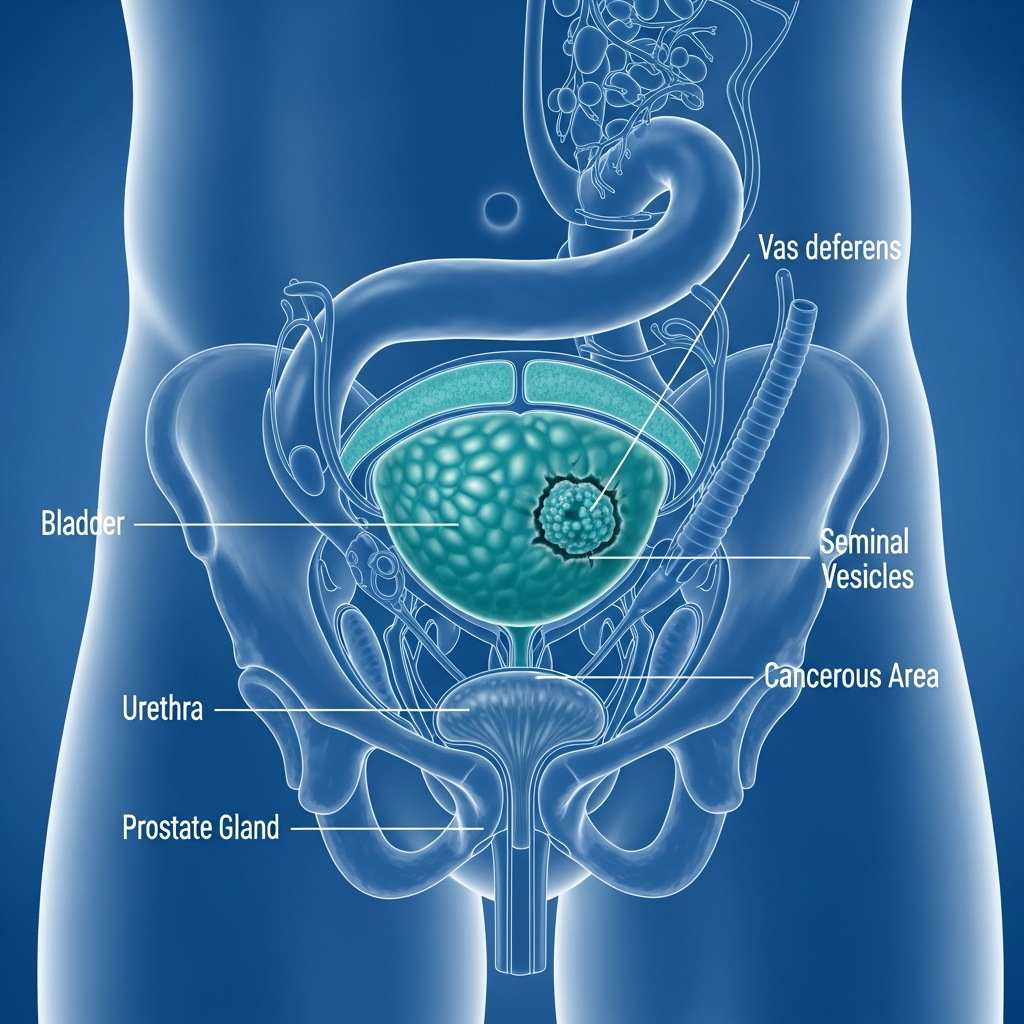
Prostate cancer is the most common cancer in men over 50. When detected early, it is highly treatable with excellent long-term cure rates. Dr. Jaura offers state-of-the-art radiation therapy for prostate cancer — including IMRT, IGRT, and brachytherapy — with outcomes equivalent to surgery but with better preservation of bladder and sexual function.
Understanding Prostate Cancer Risk Groups
Active surveillance or RT alone
RT with short-term hormones
RT with long-term hormone therapy
Warning Signs
- Frequent urination, especially at night (nocturia)
- Difficulty starting or stopping urine flow
- Weak or interrupted urine stream
- Blood in urine (haematuria) or semen
- Pain or burning during urination
- Persistent pain in the back, hips, or pelvis (advanced disease)
- Elevated PSA on blood test — most cases detected at this stage
Treatment Options
1. IMRT + IGRT (Standard External Beam RT)
IMRT with daily IGRT is the most precise form of external radiation for prostate cancer. The prostate receives a high tumouricidal dose while the rectum, bladder, and bowel are carefully protected. Modern hypofractionated regimens deliver treatment in just 20–28 sessions (4–6 weeks) with equivalent outcomes to conventional 39-session courses.
2. SBRT — Ultra-Hypofractionation (5 Sessions)
SBRT delivers very high doses per fraction in just 5 sessions over 2 weeks. Clinical trials have confirmed that prostate SBRT achieves the same disease control as conventional IMRT with excellent tolerability. This is ideal for patients who want minimal hospital visits.
3. Brachytherapy (LDR/HDR)
Low Dose Rate (LDR) brachytherapy involves permanently implanting radioactive seeds into the prostate — a one-time day-procedure with outstanding cure rates for low and intermediate-risk disease. HDR brachytherapy is used as a boost combined with EBRT for high-risk disease.
4. Hormone Therapy (ADT)
Prostate cancer is fuelled by testosterone. Androgen Deprivation Therapy (ADT) reduces testosterone to castrate levels, sensitising the tumour to radiation. ADT for 6 months is used for intermediate-risk disease; 2–3 years for high-risk disease.
5. Salvage Radiation after Prostatectomy
If PSA rises after prostatectomy (indicating recurrence), salvage radiation to the prostate bed offers an excellent chance of durable disease control, especially when started early at a PSA below 0.5 ng/mL.
FAQs About Prostate Cancer
Prostate Cancer Treatment in Bathinda
Expert IMRT, IGRT, and brachytherapy for prostate cancer. Consult Dr. Jaura for a personalised treatment plan.
Book Appointment Call Now