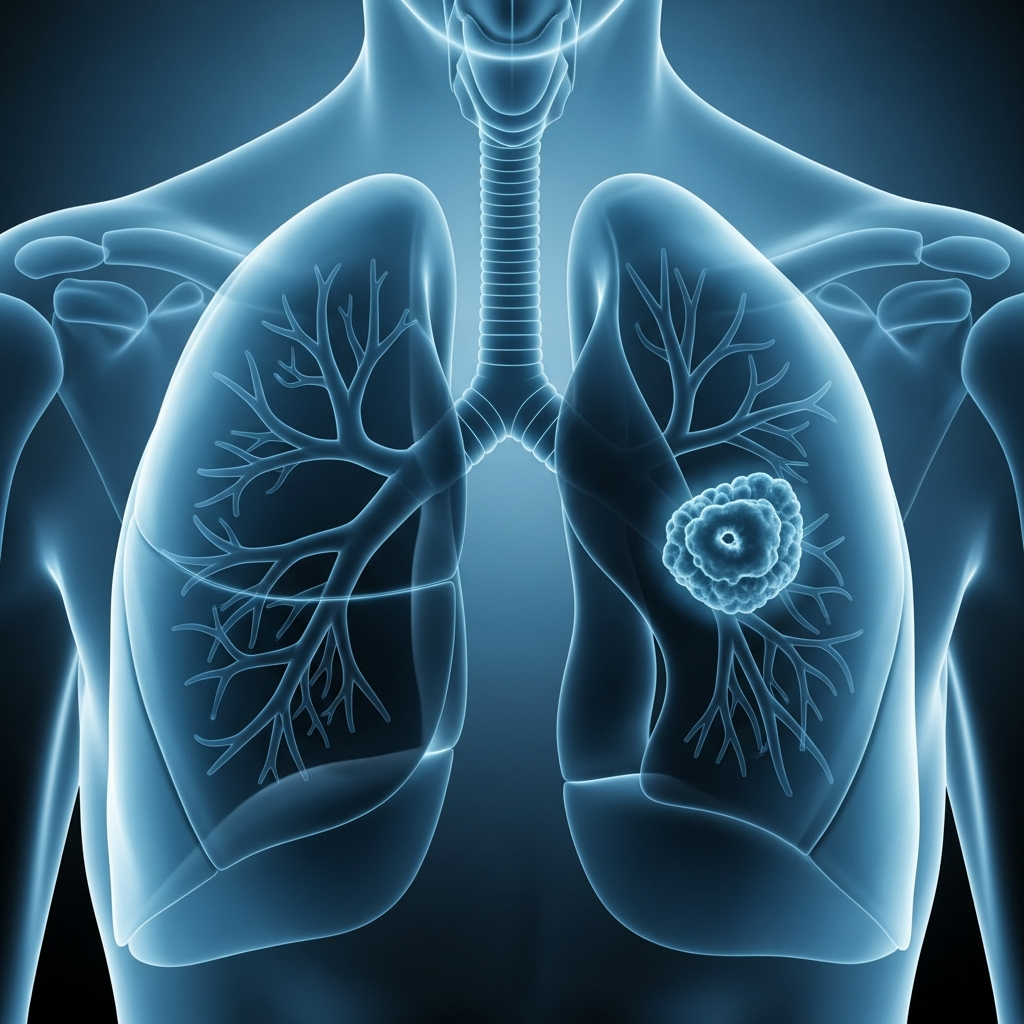
Lung cancer is the leading cause of cancer deaths worldwide. With advanced treatments including Stereotactic Body Radiotherapy (SBRT), concurrent chemoradiation, and targeted therapies, outcomes are improving significantly. Dr. Manjit Singh Jaura offers comprehensive lung cancer management at Bathinda Cancer Care.
Types of Lung Cancer
Non-Small Cell Lung Cancer (NSCLC)
Accounts for 85% of all lung cancers. Includes adenocarcinoma, squamous cell carcinoma, and large cell carcinoma. Treatment depends heavily on molecular profiling (EGFR, ALK, ROS1, PD-L1).
Small Cell Lung Cancer (SCLC)
Accounts for 15% of cases. Highly aggressive but initially very sensitive to chemotherapy and radiation. Prophylactic cranial irradiation (PCI) is standard for responders.
Warning Signs
- Persistent cough lasting more than 3 weeks
- Coughing up blood (haemoptysis)
- Breathlessness or worsening shortness of breath
- Chest pain that worsens with breathing or coughing
- Unexplained weight loss and fatigue
- Recurrent chest infections (pneumonia, bronchitis)
- Hoarseness or voice changes
- Swollen lymph nodes in the neck or collarbone area
Diagnosis
- CT Chest — detects tumour size, location, and spread to lymph nodes
- PET-CT Scan — whole-body staging, identifies metastases
- Bronchoscopy with Biopsy — for central tumours
- CT-guided Biopsy — for peripheral tumours
- Molecular Profiling — EGFR, ALK, ROS1, PD-L1 testing for targeted therapy eligibility
- MRI Brain — mandatory staging for SCLC and advanced NSCLC
Treatment Options
1. SBRT — Early-Stage Lung Cancer
For patients with early-stage (Stage I–II) NSCLC who are medically inoperable, SBRT delivers ablative doses of radiation in just 3–5 sessions with cure rates comparable to surgery. Dr. Jaura uses the Varian Halcyon system with 4D-CT planning and respiratory gating to track tumour movement during breathing.
2. Concurrent Chemoradiation — Locally Advanced NSCLC
For Stage III unresectable NSCLC, concurrent chemoradiotherapy with platinum-based chemotherapy followed by Durvalumab immunotherapy consolidation (PACIFIC regimen) is the current standard of care.
3. Targeted Therapy
Patients with EGFR mutations benefit from Osimertinib (Tagrisso). ALK-positive patients respond remarkably to Alectinib or Crizotinib — oral medications that significantly extend progression-free survival.
4. Palliative Radiation Therapy
For metastatic disease, radiation provides powerful symptom relief — treating bone metastases, superior vena cava obstruction, haemoptysis, and brain metastases with short, effective treatment courses.
FAQs About Lung Cancer
Expert Lung Cancer Treatment in Bathinda
Book a consultation with Dr. Jaura for a comprehensive evaluation and personalised treatment plan.
Book Appointment Call Now